Cryptography Behind Killing Proof-of-Work: Unlocking Protocol Security 🔐
Explore the cryptographic primitives powering Killing Proof-of-Work protocols and how they enhance security in blockchain systems. Watch the full talk for insights!

media.ccc.de
2.1K views • Sep 11, 2019
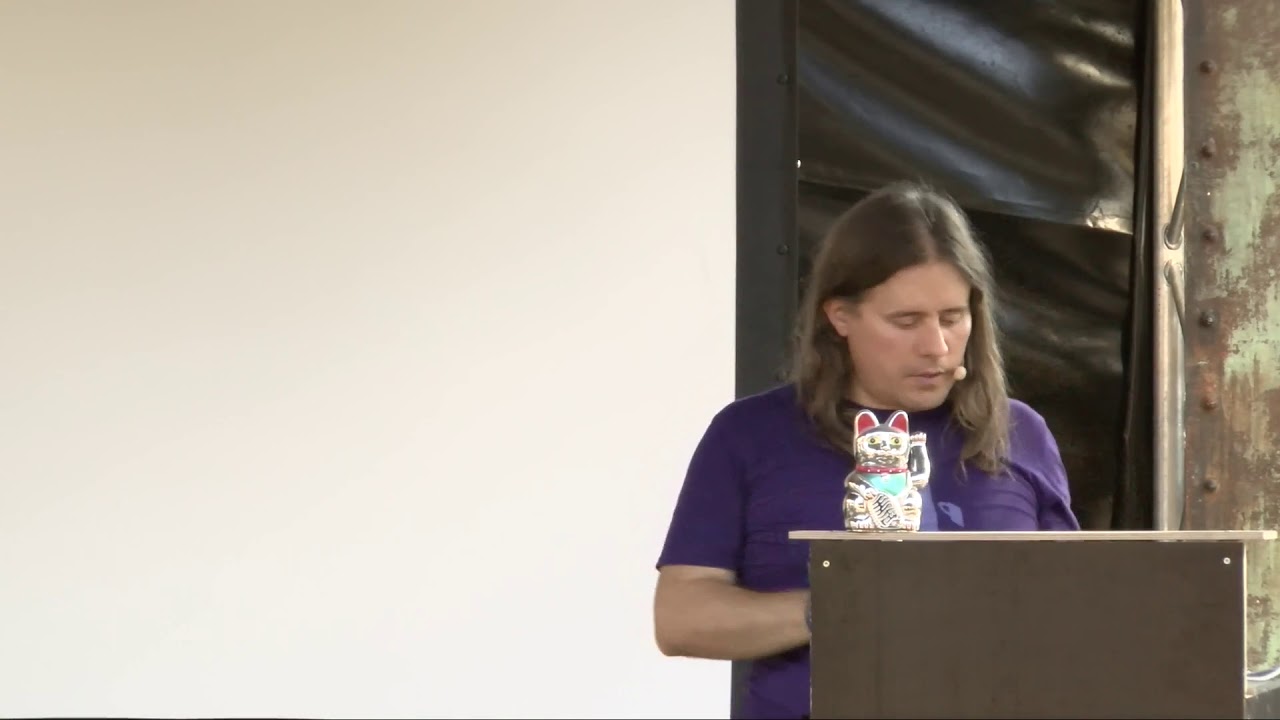
About this video
https://media.ccc.de/v/thms-26-cryptography-of-killing-proof-of-work
We briefly discuss the range of cryptographic primitives being used by protocols that seek to make proof-of-work protocols obsolete. We shall focus primarily on these cryptographic building blocks themselves, not overly on the different protocols built form them.
There are a handful of protocols consuming enormous amounts of energy in proof-of-work schemes, which provide only rather tenuous security assurances. In practice, proof-of-work also invalidates these protocols original goal of being distributed.
There is also a zoo of protocols designs, both new and from the 80s, that provide far stronger security than proof-of-work at minimal cost. We shall discuss the distinctive cryptographic primitives used by these protocols, without examining any of these critters too closely.
In essence, our taxonomy splits as blind signatures vs. verifiable random functions (VRFs) vs. randomness beacons, with the latter consisting of publicly verifiable secret sharing (PVSS) and verifiable delay functions (VDFs). We only have time for a cursory look at the mathematics usable to build each of these, but this should explain some of their uses, strengths, and weaknesses.
Jeff Burdges
http://talx.thm.cloud/thms/talk/Z3VR8P/
We briefly discuss the range of cryptographic primitives being used by protocols that seek to make proof-of-work protocols obsolete. We shall focus primarily on these cryptographic building blocks themselves, not overly on the different protocols built form them.
There are a handful of protocols consuming enormous amounts of energy in proof-of-work schemes, which provide only rather tenuous security assurances. In practice, proof-of-work also invalidates these protocols original goal of being distributed.
There is also a zoo of protocols designs, both new and from the 80s, that provide far stronger security than proof-of-work at minimal cost. We shall discuss the distinctive cryptographic primitives used by these protocols, without examining any of these critters too closely.
In essence, our taxonomy splits as blind signatures vs. verifiable random functions (VRFs) vs. randomness beacons, with the latter consisting of publicly verifiable secret sharing (PVSS) and verifiable delay functions (VDFs). We only have time for a cursory look at the mathematics usable to build each of these, but this should explain some of their uses, strengths, and weaknesses.
Jeff Burdges
http://talx.thm.cloud/thms/talk/Z3VR8P/
Tags and Topics
Browse our collection to discover more content in these categories.
Video Information
Views
2.1K
Likes
25
Duration
27:49
Published
Sep 11, 2019
User Reviews
4.3
(2) Related Trending Topics
LIVE TRENDSRelated trending topics. Click any trend to explore more videos.
Trending Now