Calculating with Upper and Lower Bounds | Maths | FuseSchool
This video explains how to perform calculations using upper and lower bounds in mathematics, providing a clear understanding of the concepts involved.

FuseSchool - Global Education
50.8K views • May 6, 2020
About this video
Calculating With Upper & Lower Bounds | Number | Maths | FuseSchool
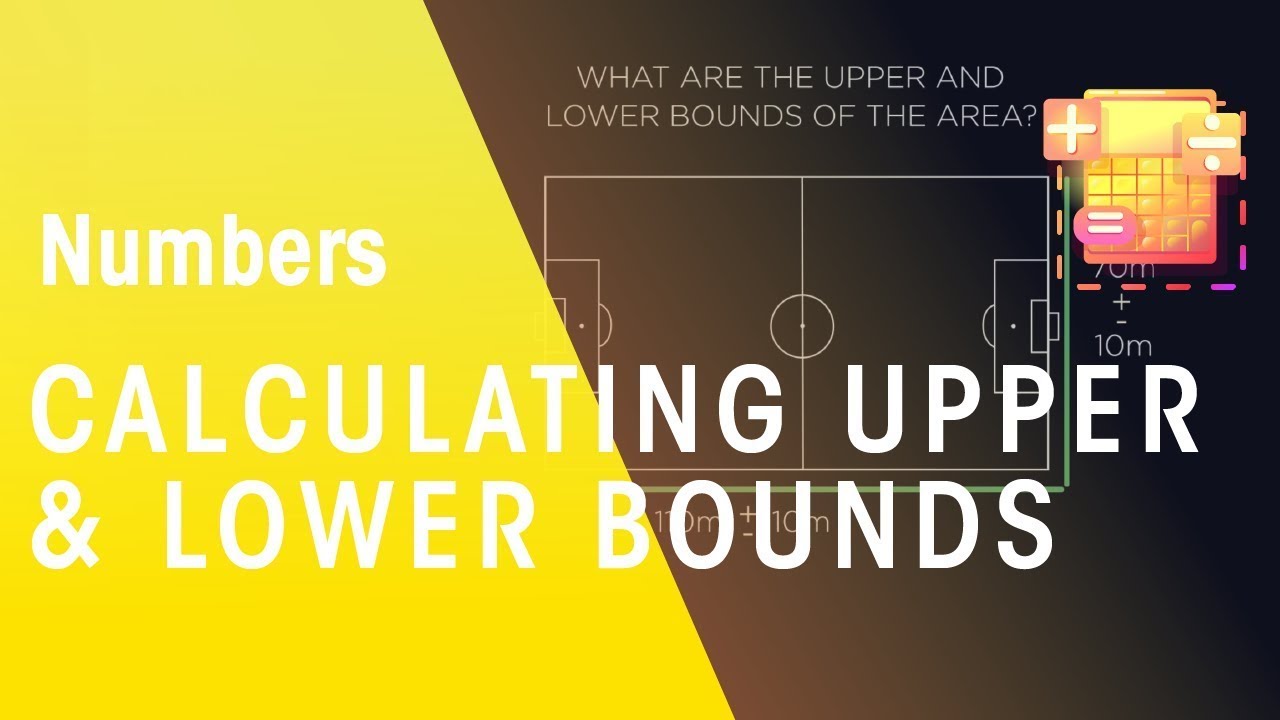
In this video we are going to look at how to calculate with upper and lower bounds.
To find the upper bound of an addition or of an area, you would want to multiply the upper bounds of both measurements, as this would give the largest possible sum / area. Whereas to get the lower bound of a addition or multiplication (such as area) you would multiply the lower bounds of both measurements.
For subtraction we need to think a little more carefully. To get the upper bound of a subtraction, you would want to take the upper bound of the first measurement and subtract the lower bound of the second, to give the largest possible outcome. Whereas to get the lower bound of a subtraction you would want to take a big value (upper bound second value) away from the smallest possible value (lower bound first value).
We also need to think more carefully about division. To get an upper bound answer, we would want to divide a big number (upper bound) by a small number (lower bound). Whereas a lower bound division would be the opposite; divide a small number (lower bound) by the biggest possible value (upper bound).
CREDITS
Animation & Design: Martin Mukhanu
Narration: Lucy Billings
Script: Lucy Billings
SUBSCRIBE to the FuseSchool YouTube channel for many more educational videos. Our teachers and animators come together to make fun & easy-to-understand videos in Chemistry, Biology, Physics, Maths & ICT.
VISIT us at www.fuseschool.org, where all of our videos are carefully organised into topics and specific orders, and to see what else we have on offer. Comment, like and share with other learners. You can both ask and answer questions, and teachers will get back to you.
These videos can be used in a flipped classroom model or as a revision aid.
Find all of our Chemistry videos here: https://www.youtube.com/playlist?list=PLW0gavSzhMlReKGMVfUt6YuNQsO0bqSMV
Find all of our Biology videos here: https://www.youtube.com/playlist?list=PLW0gavSzhMlQYSpKryVcEr3ERup5SxHl0
Find all of our Physics videos here: https://www.youtube.com/playlist?list=PLW0gavSzhMlTWm6Sr5uN2Uv5TXHiZUq8b
Find all of our Maths videos here: https://www.youtube.com/playlist?list=PLW0gavSzhMlTKBNbHH5u1SNnsrOaacKLu
Instagram: https://www.instagram.com/fuseschool/
Facebook: https://www.facebook.com/fuseschool/
Twitter: https://twitter.com/fuseSchool
Access a deeper Learning Experience in the FuseSchool platform and app: www.fuseschool.org
Follow us: http://www.youtube.com/fuseschool
Befriend us: http://www.facebook.com/fuseschool
This is an Open Educational Resource. If you would like to use the video, please contact us: info@fuseschool.org
In this video we are going to look at how to calculate with upper and lower bounds.
To find the upper bound of an addition or of an area, you would want to multiply the upper bounds of both measurements, as this would give the largest possible sum / area. Whereas to get the lower bound of a addition or multiplication (such as area) you would multiply the lower bounds of both measurements.
For subtraction we need to think a little more carefully. To get the upper bound of a subtraction, you would want to take the upper bound of the first measurement and subtract the lower bound of the second, to give the largest possible outcome. Whereas to get the lower bound of a subtraction you would want to take a big value (upper bound second value) away from the smallest possible value (lower bound first value).
We also need to think more carefully about division. To get an upper bound answer, we would want to divide a big number (upper bound) by a small number (lower bound). Whereas a lower bound division would be the opposite; divide a small number (lower bound) by the biggest possible value (upper bound).
CREDITS
Animation & Design: Martin Mukhanu
Narration: Lucy Billings
Script: Lucy Billings
SUBSCRIBE to the FuseSchool YouTube channel for many more educational videos. Our teachers and animators come together to make fun & easy-to-understand videos in Chemistry, Biology, Physics, Maths & ICT.
VISIT us at www.fuseschool.org, where all of our videos are carefully organised into topics and specific orders, and to see what else we have on offer. Comment, like and share with other learners. You can both ask and answer questions, and teachers will get back to you.
These videos can be used in a flipped classroom model or as a revision aid.
Find all of our Chemistry videos here: https://www.youtube.com/playlist?list=PLW0gavSzhMlReKGMVfUt6YuNQsO0bqSMV
Find all of our Biology videos here: https://www.youtube.com/playlist?list=PLW0gavSzhMlQYSpKryVcEr3ERup5SxHl0
Find all of our Physics videos here: https://www.youtube.com/playlist?list=PLW0gavSzhMlTWm6Sr5uN2Uv5TXHiZUq8b
Find all of our Maths videos here: https://www.youtube.com/playlist?list=PLW0gavSzhMlTKBNbHH5u1SNnsrOaacKLu
Instagram: https://www.instagram.com/fuseschool/
Facebook: https://www.facebook.com/fuseschool/
Twitter: https://twitter.com/fuseSchool
Access a deeper Learning Experience in the FuseSchool platform and app: www.fuseschool.org
Follow us: http://www.youtube.com/fuseschool
Befriend us: http://www.facebook.com/fuseschool
This is an Open Educational Resource. If you would like to use the video, please contact us: info@fuseschool.org
Tags and Topics
Browse our collection to discover more content in these categories.
Video Information
Views
50.8K
Likes
363
Duration
2:06
Published
May 6, 2020
User Reviews
4.2
(10)