Ask The Experts: Discover the Marvel of the Colossus Computer 🖥️
Explore the fascinating history of Colossus at The National Museum of Computing, home to the world’s largest collection of working historical computers. Learn how this groundbreaking machine shaped modern computing!

TNMoC
5.2K views • Nov 4, 2020
About this video
The National Museum of Computing houses the world’s largest collection of working historical computers.
Among our collection is a rebuild of Colossus - a working example of the 10 cryptography code-breaking machines that cracked the secret communications of Hitler during World War II.
The 10 Colossus either disappeared into the security state or failed to survive the war; many of the technical materials were deliberately destroyed.
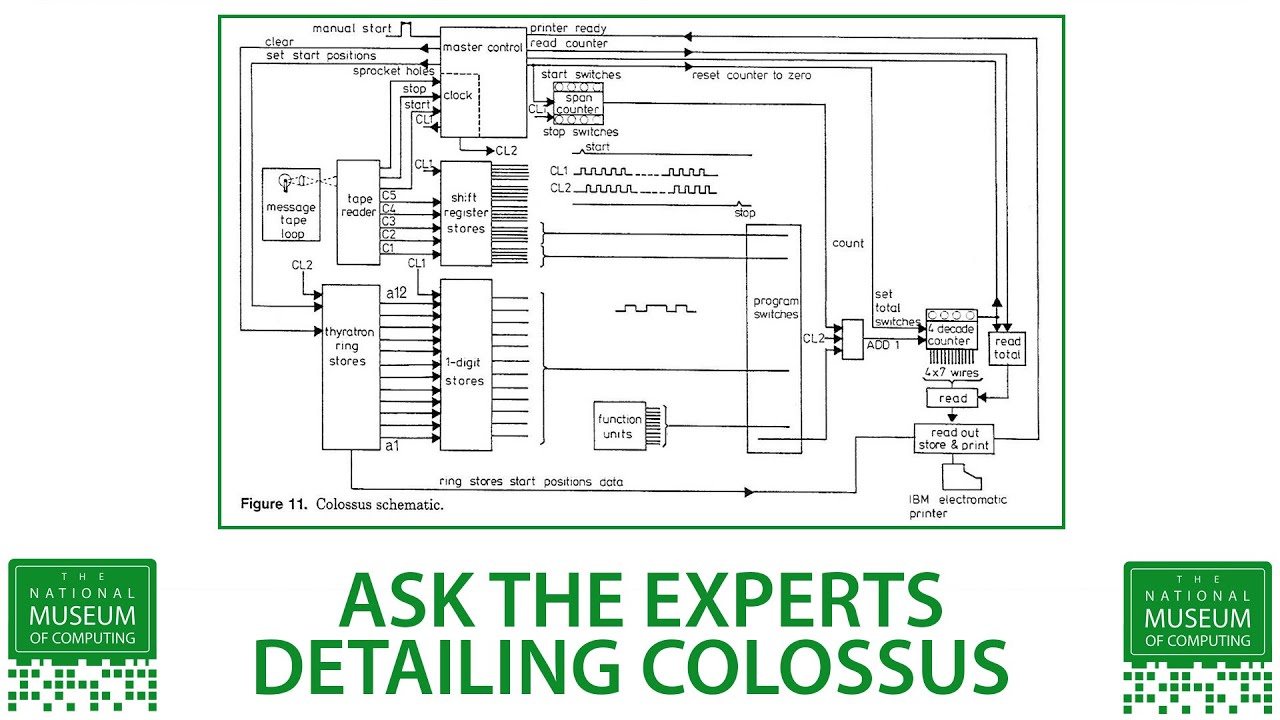
Gavin Clarke talks to National Museum volunteer guide Peter Hoath about the significance of one particular technical diagram; a diagram drawn years later from the memory of Tommy Flowers - the individual responsible for Colossus.
Got a question about the history of war-time cryptographic or modern electronic computing? Curious about our work and collection? Tweet us with the hashtag: #askTNMOC.
You can also go deeper by joining us in person on a trip to the Museum or by taking a guide-lead virtual tour:
https://www.tnmoc.org/events/2020/10/5/the-national-museum-of-computing-public-tour
For schools, we offer special remote-learning packages:
https://www.tnmoc.org/remote-learning-packages
Picture credits:
- Colossus diagram - Tommy Flowers, from "The Design of Colossus" in the Annals of the History of Computing Volume 5 number 3, July 1983
- Tommy Flowers - public domain - reference: https://en.wikipedia.org/wiki/Tommy_Flowers#/media/File:Tommy_Flowers.jpg
- Colossus (rebuild) video at TNMOC - licensed by TNMOC under Creative Commons license: https://creativecommons.org/licenses/by-nc/4.0/
Among our collection is a rebuild of Colossus - a working example of the 10 cryptography code-breaking machines that cracked the secret communications of Hitler during World War II.
The 10 Colossus either disappeared into the security state or failed to survive the war; many of the technical materials were deliberately destroyed.
Gavin Clarke talks to National Museum volunteer guide Peter Hoath about the significance of one particular technical diagram; a diagram drawn years later from the memory of Tommy Flowers - the individual responsible for Colossus.
Got a question about the history of war-time cryptographic or modern electronic computing? Curious about our work and collection? Tweet us with the hashtag: #askTNMOC.
You can also go deeper by joining us in person on a trip to the Museum or by taking a guide-lead virtual tour:
https://www.tnmoc.org/events/2020/10/5/the-national-museum-of-computing-public-tour
For schools, we offer special remote-learning packages:
https://www.tnmoc.org/remote-learning-packages
Picture credits:
- Colossus diagram - Tommy Flowers, from "The Design of Colossus" in the Annals of the History of Computing Volume 5 number 3, July 1983
- Tommy Flowers - public domain - reference: https://en.wikipedia.org/wiki/Tommy_Flowers#/media/File:Tommy_Flowers.jpg
- Colossus (rebuild) video at TNMOC - licensed by TNMOC under Creative Commons license: https://creativecommons.org/licenses/by-nc/4.0/
Tags and Topics
Browse our collection to discover more content in these categories.
Video Information
Views
5.2K
Likes
138
Duration
16:18
Published
Nov 4, 2020
User Reviews
4.6
(1)