Internal Organs Anatomy Overview ♻️
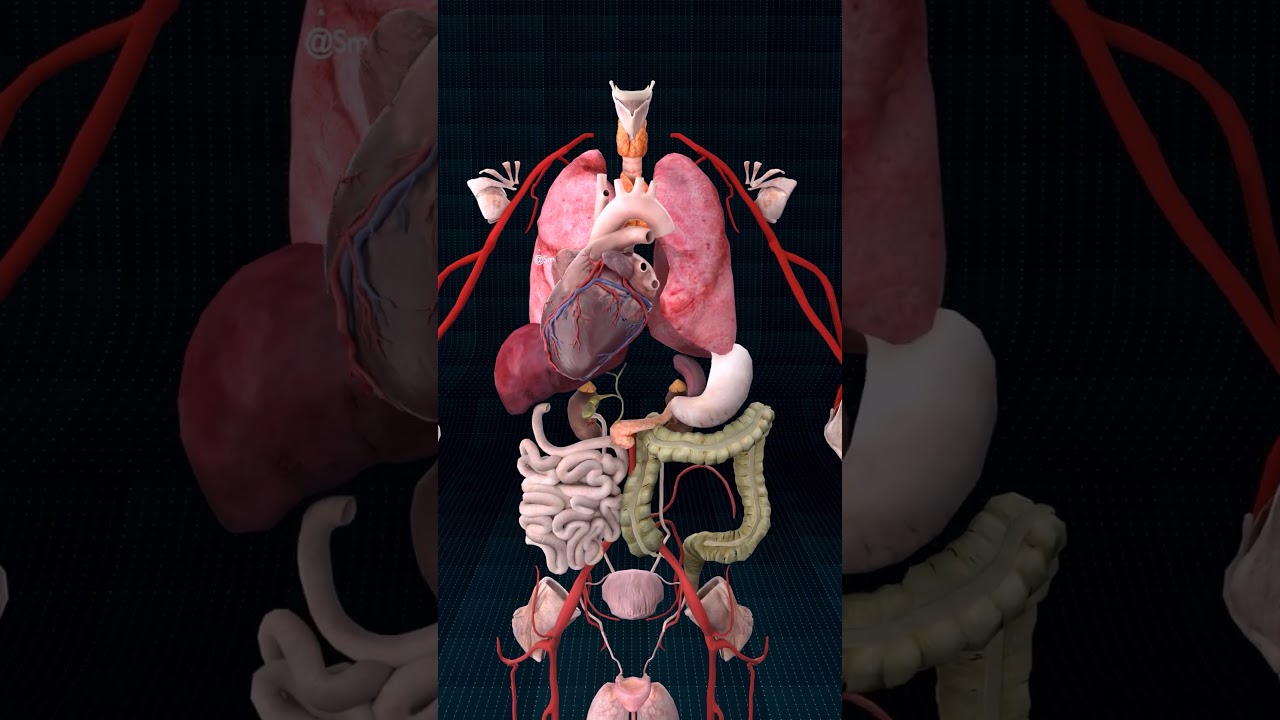
Explore the structure and functions of internal organs in this comprehensive overview. Learn about their vital roles inside the body.

Smart Doctor 👨⚕️
5.0M views • May 8, 2025
About this video
https://www.youtube.com/@Smart.Doctor1
===============
General Overview of Internal Organs
Definition: Internal organs are structures within the body that perform specific functions necessary for life.
Number: Approximately 78-80 in the human body.
Location: Primarily located within the body cavities (cranial, thoracic, abdominal, and pelvic).
Function: Each organ has a specialized role, contributing to the overall homeostasis and survival of the organism.
Organ Systems and Examples
To better understand the scope of internal organs, here's a breakdown by organ system:
Cardiovascular System:
Heart: Pumps blood.
Blood vessels (arteries, veins, capillaries): Transport blood.
Respiratory System:
Lungs: Facilitate gas exchange (oxygen and carbon dioxide).
Trachea, bronchi: Airways.
Digestive System:
Stomach: Breaks down food.
Small intestine: Absorbs nutrients.
Large intestine: Absorbs water, eliminates waste.
Liver: Produces bile, metabolizes substances.
Pancreas: Produces digestive enzymes and hormones.
Gallbladder: Stores bile.
Urinary System:
Kidneys: Filter blood, produce urine.
Bladder: Stores urine.
Ureters, urethra: Transport urine.
Endocrine System:
Glands (pituitary, thyroid, adrenal, etc.): Produce hormones.
Nervous System:
Brain: Controls bodily functions.
Spinal cord: Transmits signals.
Reproductive System:
Ovaries (female): Produce eggs, hormones.
Uterus (female): Supports fetal development.
Testes (male): Produce sperm, hormones.
Lymphatic System:
Spleen: Filters blood, immune function.
Thymus: Immune function.
Lymph nodes: Filter lymph, immune function.
Essential Functions of Internal Organs
Regulation: Maintaining internal stability (homeostasis).
Nutrient Processing: Digestion, absorption, and metabolism of nutrients.
Waste Removal: Filtering and eliminating waste products.
Reproduction: Producing offspring.
Protection: Immune defense against pathogens.
Communication: Hormone and nerve signaling.
=============
Smart Doctor 👨⚕️
@SmartDoctor1 /youtube
=============
#largeintestine #colon #anatomi #anatomia #anatomía #Rectum
#heart #healthyheart #cardiology #hearthealth #loveyourheart #heartdisease #heartcare #heartbeat #heartwellness #fitnessforheart #해부학 #해부 #anatomíahumana
#aorticvalve #mitralvalv #tricuspidvalve #pulmonaryhypertension #heartanatomy #3danimation #cardiology #anatomy #heart #cardio #meded #education #3danimation #3dmodel #animation #smartdoctor1 #scicomm #medtech #pharma #medstudent #vray #doctor
===============
General Overview of Internal Organs
Definition: Internal organs are structures within the body that perform specific functions necessary for life.
Number: Approximately 78-80 in the human body.
Location: Primarily located within the body cavities (cranial, thoracic, abdominal, and pelvic).
Function: Each organ has a specialized role, contributing to the overall homeostasis and survival of the organism.
Organ Systems and Examples
To better understand the scope of internal organs, here's a breakdown by organ system:
Cardiovascular System:
Heart: Pumps blood.
Blood vessels (arteries, veins, capillaries): Transport blood.
Respiratory System:
Lungs: Facilitate gas exchange (oxygen and carbon dioxide).
Trachea, bronchi: Airways.
Digestive System:
Stomach: Breaks down food.
Small intestine: Absorbs nutrients.
Large intestine: Absorbs water, eliminates waste.
Liver: Produces bile, metabolizes substances.
Pancreas: Produces digestive enzymes and hormones.
Gallbladder: Stores bile.
Urinary System:
Kidneys: Filter blood, produce urine.
Bladder: Stores urine.
Ureters, urethra: Transport urine.
Endocrine System:
Glands (pituitary, thyroid, adrenal, etc.): Produce hormones.
Nervous System:
Brain: Controls bodily functions.
Spinal cord: Transmits signals.
Reproductive System:
Ovaries (female): Produce eggs, hormones.
Uterus (female): Supports fetal development.
Testes (male): Produce sperm, hormones.
Lymphatic System:
Spleen: Filters blood, immune function.
Thymus: Immune function.
Lymph nodes: Filter lymph, immune function.
Essential Functions of Internal Organs
Regulation: Maintaining internal stability (homeostasis).
Nutrient Processing: Digestion, absorption, and metabolism of nutrients.
Waste Removal: Filtering and eliminating waste products.
Reproduction: Producing offspring.
Protection: Immune defense against pathogens.
Communication: Hormone and nerve signaling.
=============
Smart Doctor 👨⚕️
@SmartDoctor1 /youtube
=============
#largeintestine #colon #anatomi #anatomia #anatomía #Rectum
#heart #healthyheart #cardiology #hearthealth #loveyourheart #heartdisease #heartcare #heartbeat #heartwellness #fitnessforheart #해부학 #해부 #anatomíahumana
#aorticvalve #mitralvalv #tricuspidvalve #pulmonaryhypertension #heartanatomy #3danimation #cardiology #anatomy #heart #cardio #meded #education #3danimation #3dmodel #animation #smartdoctor1 #scicomm #medtech #pharma #medstudent #vray #doctor
Tags and Topics
Browse our collection to discover more content in these categories.
Video Information
Views
5.0M
Likes
24.4K
Duration
0:16
Published
May 8, 2025
User Reviews
4.3
(990) Related Trending Topics
LIVE TRENDSRelated trending topics. Click any trend to explore more videos.
No specific trending topics match this video yet.
Explore All Trends