Adaptive Filtering & LMS in DSP 📡
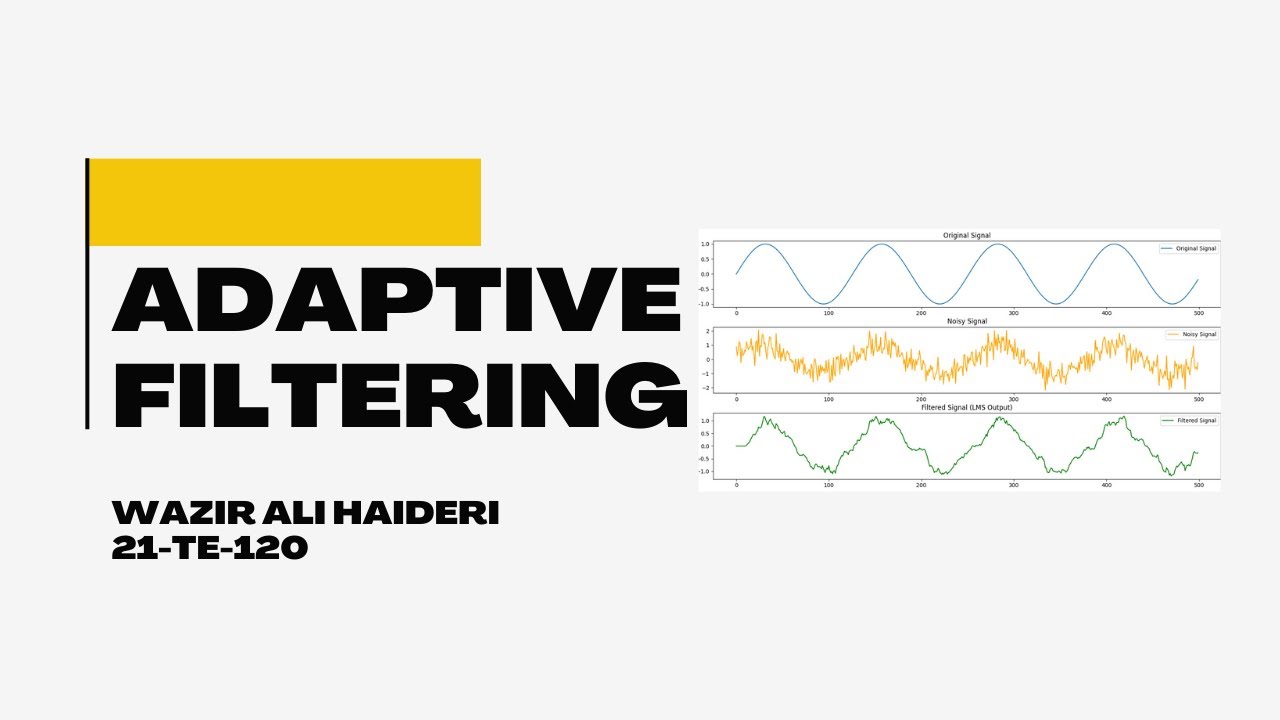
Learn how adaptive filters, like LMS, dynamically adjust their parameters in real-time to optimize performance in DSP applications.

WAZEER ALI HAIDERI
92 views • Jun 22, 2024
About this video
What is Adaptive Filtering?
"Adaptive filtering refers to a type of filter that can adjust its parameters in real-time to optimize its performance. This technology is widely used in applications such as noise cancellation, echo cancellation, and improving sound or data quality."
Key Components of Adaptive Filtering:
Adaptive filters consist of several key components:
1. Filter Structure:
Typically, an FIR (Finite Impulse Response) filter is used.
2. Adaptive Algorithm:
This is the method used to adjust the filter parameters. Common algorithms include LMS (Least Mean Squares) and RLS (Recursive Least Squares).
3. Reference Signal:
This is the desired signal that the adaptive filter aims to achieve or maintain.
Applications of Adaptive Filtering:
Noise Cancellation:
"Adaptive filters are widely used in noise-canceling headphones. These filters generate a signal that cancels out unwanted background noise, providing a clearer sound experience."
Echo Cancellation:
"In telecommunications, adaptive filters help eliminate echoes, ensuring clear and uninterrupted communication."
Channel Equalization:
"In data transmission, adaptive filters improve the quality by compensating for distortions introduced by the transmission channel."
#dsp #adaptivefilter #signal
"Adaptive filtering refers to a type of filter that can adjust its parameters in real-time to optimize its performance. This technology is widely used in applications such as noise cancellation, echo cancellation, and improving sound or data quality."
Key Components of Adaptive Filtering:
Adaptive filters consist of several key components:
1. Filter Structure:
Typically, an FIR (Finite Impulse Response) filter is used.
2. Adaptive Algorithm:
This is the method used to adjust the filter parameters. Common algorithms include LMS (Least Mean Squares) and RLS (Recursive Least Squares).
3. Reference Signal:
This is the desired signal that the adaptive filter aims to achieve or maintain.
Applications of Adaptive Filtering:
Noise Cancellation:
"Adaptive filters are widely used in noise-canceling headphones. These filters generate a signal that cancels out unwanted background noise, providing a clearer sound experience."
Echo Cancellation:
"In telecommunications, adaptive filters help eliminate echoes, ensuring clear and uninterrupted communication."
Channel Equalization:
"In data transmission, adaptive filters improve the quality by compensating for distortions introduced by the transmission channel."
#dsp #adaptivefilter #signal
Video Information
Views
92
Likes
4
Duration
2:20
Published
Jun 22, 2024
Related Trending Topics
LIVE TRENDSRelated trending topics. Click any trend to explore more videos.
No specific trending topics match this video yet.
Explore All Trends