2-Minute Neuroscience: Vestibular System 🧠
Learn about the vestibular system's role in movement and balance, focusing on the vestibular labyrinth and its functions in this quick overview.

Neuroscientifically Challenged
850.7K views • Sep 2, 2016
About this video
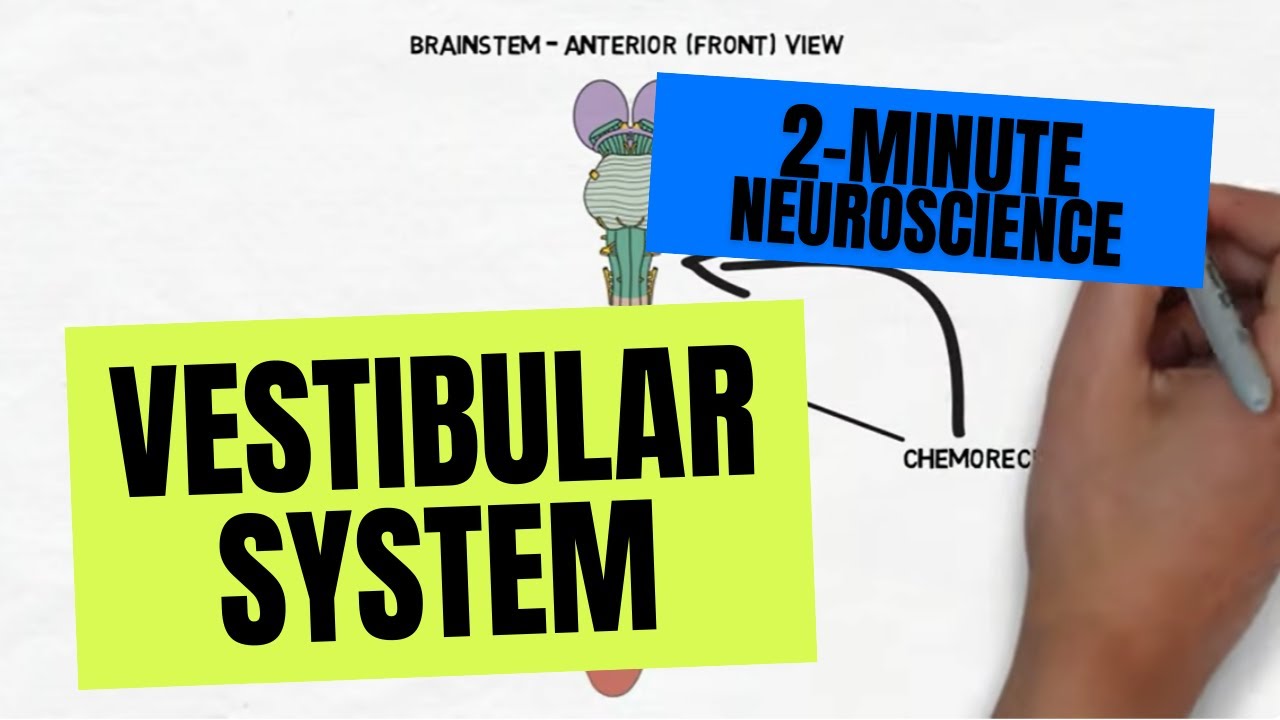
The vestibular system is a sensory system that is essential to normal movement and equilibrium. In this video, I discuss the vestibular labyrinth---the primary structure of the vestibular system, which consists of the semicircular canals, ampullae, and otolith organs. All of these are essential to the vestibular system's ability to provide the brain with information about things like motion, head position, and spatial orientation.
For an article (on my website) that explains the vestibular system, click this link: https://neuroscientificallychallenged.com/posts/know-your-brain-vestibular-system
If you're looking for accessible and entertaining ways to learn more about the brain, check out my books:
📚Your Brain, Explained: What Neuroscience Reveals About Your Brain and its Quirks: https://www.amazon.com/Your-Brain-Explained-Neuroscience-Reveals/dp/1473696569/
📚Bizarre: The Most Peculiar Cases of Human Behavior and What They Tell Us About How the Brain Works: https://www.amazon.com/Bizarre-Peculiar-Cases-Human-Behavior/dp/139980121X/
TRANSCRIPT:
Welcome to 2 minute neuroscience, where I simplistically explain neuroscience topics in 2 minutes or less. In this installment I will discuss the vestibular system.
The vestibular system is a sensory system responsible for providing our brain with information about motion, head position, and spatial orientation; it also is involved with motor functions that allow us to keep our balance, stabilize our head and body during movement, and maintain posture.
The main components of the vestibular system are found in the inner ear in a system of compartments called the vestibular labyrinth, which is continuous with the cochlea. The vestibular labyrinth contains the semicircular canals which are three tubes that are each situated in a plane in which the head can rotate. Each of the canals can detect one of the following head movements: nodding up and down, shaking side to side, or tilting left and right. The semicircular canals are filled with a fluid called endolymph. When the head is rotated, it causes the movement of endolymph through the canal that corresponds to the plane of the movement.
The endolymph flows into an expansion of the canal called the ampulla, within which there are hair cells, the sensory receptors of the vestibular system. At the top of each hair cell is a collection of small "hairs" called stereocilia. The movement of the endolymph causes movement of these stereocilia, which leads to the the release of neurotransmitters to send information about the plane of movement to the brain.
The vestibular system uses two other organs, known as the otolith organs, to detect forward and backward movements and gravitational forces. There are two otolith organs in the vestibular labyrinth: the utricle, which detects movement in the horizontal plane, and the saccule, which detects movement in the vertical plane. Within the utricle and saccule, hair cells detect movement when crystals of calcium carbonate called otoconia shift in response to it, leading to movement in the layers below the otoconia and displacement of hair cells.
REFERENCE:
Nolte J. The Human Brain: An Introduction to its Functional Anatomy. 6th ed. Philadelphia, PA. Elsevier; 2009.
For an article (on my website) that explains the vestibular system, click this link: https://neuroscientificallychallenged.com/posts/know-your-brain-vestibular-system
If you're looking for accessible and entertaining ways to learn more about the brain, check out my books:
📚Your Brain, Explained: What Neuroscience Reveals About Your Brain and its Quirks: https://www.amazon.com/Your-Brain-Explained-Neuroscience-Reveals/dp/1473696569/
📚Bizarre: The Most Peculiar Cases of Human Behavior and What They Tell Us About How the Brain Works: https://www.amazon.com/Bizarre-Peculiar-Cases-Human-Behavior/dp/139980121X/
TRANSCRIPT:
Welcome to 2 minute neuroscience, where I simplistically explain neuroscience topics in 2 minutes or less. In this installment I will discuss the vestibular system.
The vestibular system is a sensory system responsible for providing our brain with information about motion, head position, and spatial orientation; it also is involved with motor functions that allow us to keep our balance, stabilize our head and body during movement, and maintain posture.
The main components of the vestibular system are found in the inner ear in a system of compartments called the vestibular labyrinth, which is continuous with the cochlea. The vestibular labyrinth contains the semicircular canals which are three tubes that are each situated in a plane in which the head can rotate. Each of the canals can detect one of the following head movements: nodding up and down, shaking side to side, or tilting left and right. The semicircular canals are filled with a fluid called endolymph. When the head is rotated, it causes the movement of endolymph through the canal that corresponds to the plane of the movement.
The endolymph flows into an expansion of the canal called the ampulla, within which there are hair cells, the sensory receptors of the vestibular system. At the top of each hair cell is a collection of small "hairs" called stereocilia. The movement of the endolymph causes movement of these stereocilia, which leads to the the release of neurotransmitters to send information about the plane of movement to the brain.
The vestibular system uses two other organs, known as the otolith organs, to detect forward and backward movements and gravitational forces. There are two otolith organs in the vestibular labyrinth: the utricle, which detects movement in the horizontal plane, and the saccule, which detects movement in the vertical plane. Within the utricle and saccule, hair cells detect movement when crystals of calcium carbonate called otoconia shift in response to it, leading to movement in the layers below the otoconia and displacement of hair cells.
REFERENCE:
Nolte J. The Human Brain: An Introduction to its Functional Anatomy. 6th ed. Philadelphia, PA. Elsevier; 2009.
Tags and Topics
Browse our collection to discover more content in these categories.
Video Information
Views
850.7K
Likes
9.9K
Duration
1:55
Published
Sep 2, 2016
User Reviews
4.6
(170) Related Trending Topics
LIVE TRENDSRelated trending topics. Click any trend to explore more videos.
No specific trending topics match this video yet.
Explore All Trends