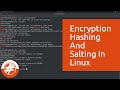
006 Encryption, Hashing & Salting Explained: How Linux Safely Stores Passwords 🔐
Discover the fundamentals of encryption, hashing, and salting techniques, and learn how Linux uses these methods to securely store passwords. Perfect for beginners and IT enthusiasts!
CommandLine
8.9K views • Mar 22, 2021
About this video
00:14 Theory About Encryption
06:08 Theory About Hashing
10:25 Theory About Salting
17:36 How Linux uses Salting to store password information.
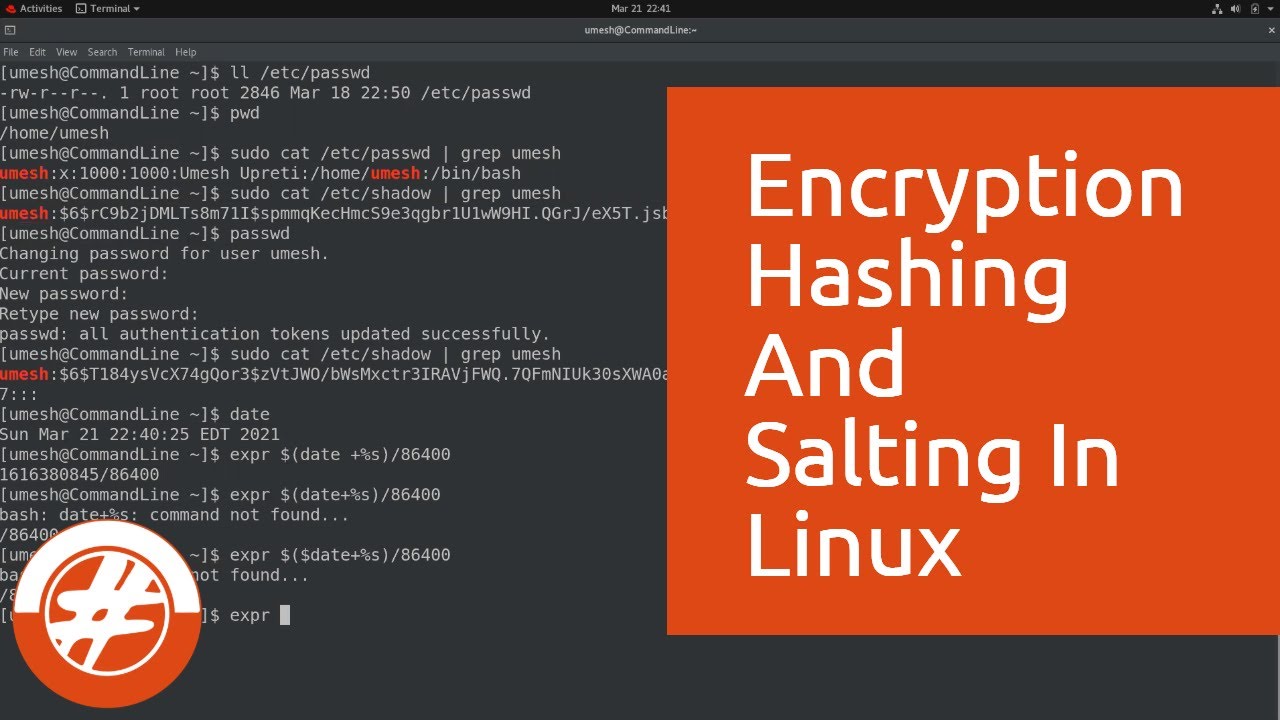
In this video, we are going to talk about #Encryption, Encryption types, #Hashing and #Salting very briefly. And we will look into how does Unix/Linux store users' password information in the form of salted hash inside "/etc/shadow" file. In early days of Unix, password used to be stored in "/etc/passwd" file but since other users and application processes need to access passwd file to read user related information, they started storing password information in a separate shadow file inside /etc directory, which has a restricted access to root user only.
Other users who run "passwd" command to change their password executes the "passwd" command with the special (setuid/setguid) permission of the root user. So when they run the "passwd" command, they would be running it as a root just to update the shadow file. We will then look into "openssl" and "mkpasswd" commands to re-generate the salted hash password using different hashing algorithm.
06:08 Theory About Hashing
10:25 Theory About Salting
17:36 How Linux uses Salting to store password information.
In this video, we are going to talk about #Encryption, Encryption types, #Hashing and #Salting very briefly. And we will look into how does Unix/Linux store users' password information in the form of salted hash inside "/etc/shadow" file. In early days of Unix, password used to be stored in "/etc/passwd" file but since other users and application processes need to access passwd file to read user related information, they started storing password information in a separate shadow file inside /etc directory, which has a restricted access to root user only.
Other users who run "passwd" command to change their password executes the "passwd" command with the special (setuid/setguid) permission of the root user. So when they run the "passwd" command, they would be running it as a root just to update the shadow file. We will then look into "openssl" and "mkpasswd" commands to re-generate the salted hash password using different hashing algorithm.
Video Information
Views
8.9K
Likes
53
Duration
23:00
Published
Mar 22, 2021
User Reviews
4.1
(1) Related Trending Topics
LIVE TRENDSRelated trending topics. Click any trend to explore more videos.
No specific trending topics match this video yet.
Explore All Trends